 Stupid Potato
 Join Potato Plus
Storybook · read aloud · free
The Fox Without a Tail, and More of Aesop's Fables
A fox who lost his tail tries to talk the others out of theirs, a fox and a goat in a well, a jackdaw in borrowed feathers, and more of Aesop's fables.
The story
The whole classic text, as Ocean reads it.
The Fox Without a Tail.
A Fox that had been caught in a trap, succeeded at last, after much painful tugging, in getting away. But he had to leave his beautiful bushy tail behind him.
For a long time he kept away from the other Foxes, for he knew well enough that they would all make fun of him and crack jokes and laugh behind his back. But it was hard for him to live alone, and at last he thought of a plan that would perhaps help him out of his trouble.
He called a meeting of all the Foxes, saying that he had something of great importance to tell the tribe.
When they were all gathered together, the Fox Without a Tail got up and made a long speech about those Foxes who had come to harm because of their tails.
This one had been caught by hounds when his tail had become entangled in the hedge. That one had not been able to run fast enough because of the weight of his brush. Besides, it was well known, he said, that men hunt Foxes simply for their tails, which they cut off as prizes of the hunt.
With such proof of the danger and uselessness of having a tail, said Master Fox, he would advise every Fox to cut it off, if he valued life and safety.
When he had finished talking, an old Fox arose, and said, smiling:
"Master Fox, kindly turn around for a moment, and you shall have your answer."
When the poor Fox Without a Tail turned around, there arose such a storm of jeers and hooting, that he saw how useless it was to try any longer to persuade the Foxes to part with their tails.
Do not listen to the advice of him who seeks to lower you to his own level.
The Fox and the Goat.
A Fox fell into a well, and though it was not very deep, he found that he could not get out again. After he had been in the well a long time, a thirsty Goat came by. The Goat thought the Fox had gone down to drink, and so he asked if the water was good.
"The finest in the whole country," said the crafty Fox, "jump in and try it. There is more than enough for both of us."
The thirsty Goat immediately jumped in and began to drink. The Fox just as quickly jumped on the Goat's back and leaped from the tip of the Goat's horns out of the well.
The foolish Goat now saw what a plight he had got into, and begged the Fox to help him out. But the Fox was already on his way to the woods.
"If you had as much sense as you have beard, old fellow," he said as he ran, "you would have been more cautious about finding a way to get out again before you jumped in."
Look before you leap.
The Fox and the Leopard.
A Fox and a Leopard, resting lazily after a generous dinner, amused themselves by disputing about their good looks. The Leopard was very proud of his glossy, spotted coat and made disdainful remarks about the Fox, whose appearance he declared was quite ordinary.
The Fox prided himself on his fine bushy tail with its tip of white, but he was wise enough to see that he could not rival the Leopard in looks. Still he kept up a flow of sarcastic talk, just to exercise his wits and to have the fun of disputing. The Leopard was about to lose his temper when the Fox got up, yawning lazily.
"You may have a very smart coat," he said, "but you would be a great deal better off if you had a little more smartness inside your head and less on your ribs, the way I am. That's what I call real beauty."
A fine coat is not always an indication of an attractive mind.
The Wolf and the Crane.
A Wolf had been feasting too greedily, and a bone had stuck crosswise in his throat. He could get it neither up nor down, and of course he could not eat a thing. Naturally that was an awful state of affairs for a greedy Wolf.
So away he hurried to the Crane. He was sure that she, with her long neck and bill, would easily be able to reach the bone and pull it out.
"I will reward you very handsomely," said the Wolf, "if you pull that bone out for me."
The Crane, as you can imagine, was very uneasy about putting her head in a Wolf's throat. But she was grasping in nature, so she did what the Wolf asked her to do.
When the Wolf felt that the bone was gone, he started to walk away.
"But what about my reward!" called the Crane anxiously.
"What!" snarled the Wolf, whirling around. "Haven't you got it? Isn't it enough that I let you take your head out of my mouth without snapping it off?"
Expect no reward for serving the wicked.
The Vain Jackdaw and his Borrowed Feathers.
A Jackdaw chanced to fly over the garden of the King's palace. There he saw with much wonder and envy a flock of royal Peacocks in all the glory of their splendid plumage.
Now the black Jackdaw was not a very handsome bird, nor very refined in manner. Yet he imagined that all he needed to make himself fit for the society of the Peacocks was a dress like theirs. So he picked up some castoff feathers of the Peacocks and stuck them among his own black plumes.
Dressed in his borrowed finery he strutted loftily among the birds of his own kind. Then he flew down into the garden among the Peacocks. But they soon saw who he was. Angry at the cheat, they flew at him, plucking away the borrowed feathers and also some of his own.
The poor Jackdaw returned sadly to his former companions. There another unpleasant surprise awaited him. They had not forgotten his superior airs toward them, and, to punish him, they drove him away with a rain of pecks and jeers.
Borrowed feathers do not make fine birds.
The end.
From The Aesop for Children (Aesop, with pictures by Milo Winter, 1919). The original text, in the public domain, from Project Gutenberg (eBook #19994).
More stories
The Lark and Her Young Ones, and More of Aesop's Fables
5 min · read by Luna
Two Travelers and a Bear, and More of Aesop's Fables
5 min · read by Merritt
Belling the Cat, and More of Aesop's Fables
5 min · read by Ocean
The Dog in the Manger, and More of Aesop's Fables
5 min · read by Belle
The Hare and the Tortoise, and More of Aesop's Fables
6 min · read by Ocean
The Boy Who Cried Wolf, and More of Aesop's Fables
8 min · read by Merritt
The Tale of Peter Rabbit
5 min · read by Clara
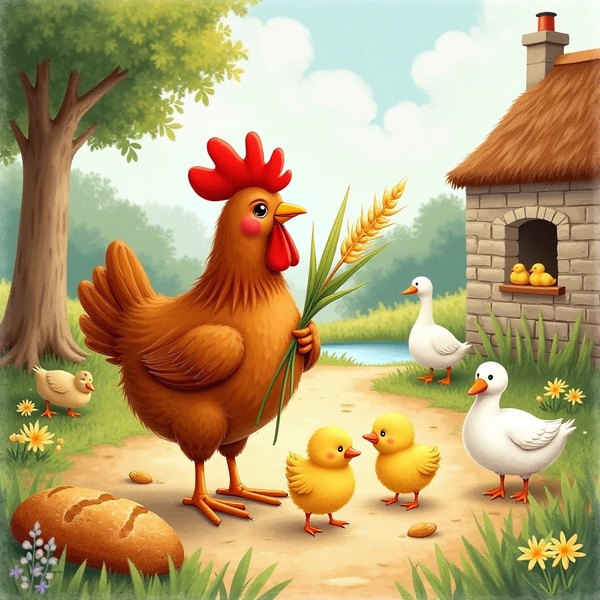
The Little Red Hen
1 min · read by Luna
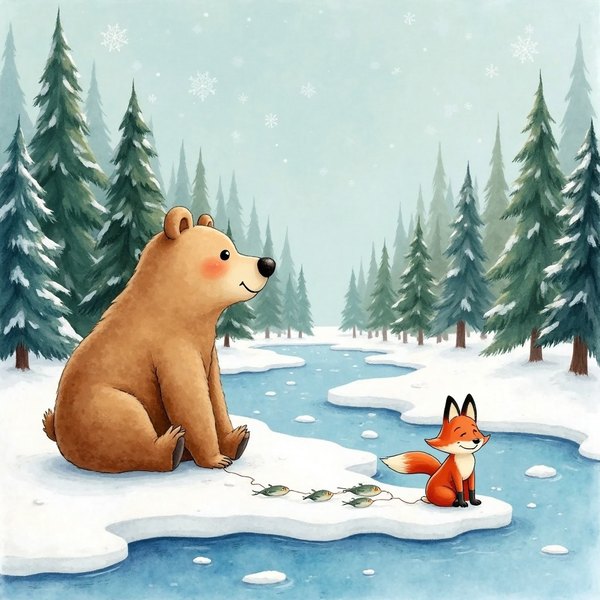
Why the Bear Is Stumpy-Tailed
1 min · read by Ocean
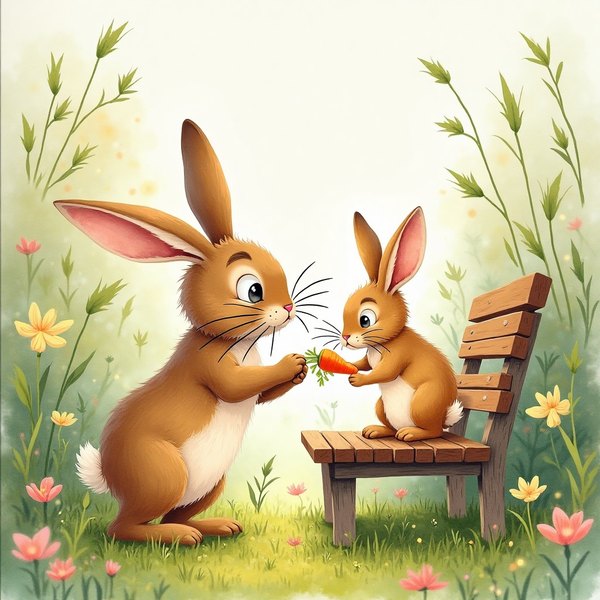
The Story of a Fierce Bad Rabbit
1 min · read by Matilda
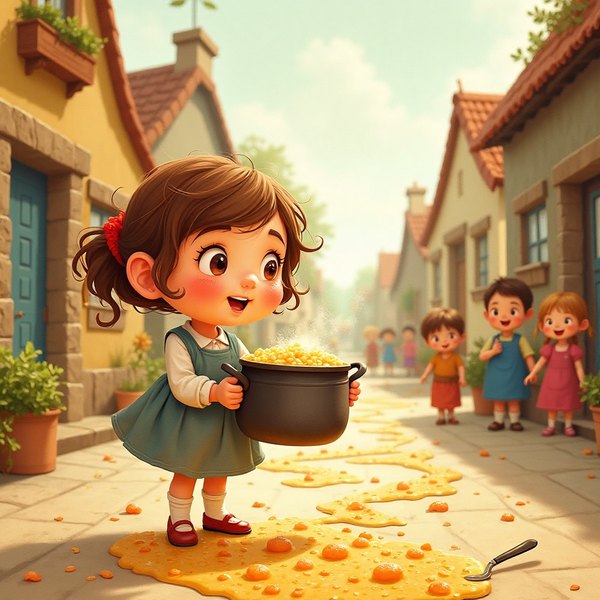
Sweet Porridge
1 min · read by Merritt
The Story of Miss Moppet
2 min · read by Cherry